browser

Did a Web Browser That Sucked Kill BlackBerry?

As Research in Motion struggles to regain its equilibrium following another quarter of terrible results, there is going to be a lot of conjecture, speculation and finger-pointing on what went wrong.

It could be the dominance of the iPhone, a failure to execute strategically, weak leadership, products that failed to resonate with changing consumer tastes, or a market that shifted away from the BlackBerry.

The Web Browser Sucked

But if you want to get down to the heart of the BlackBerry’s woes, it’s the browser. For years, the BlackBerry excelled at e-mail and it had a pretty good phone but the Web browser sucked – and that would be a polite description.

Even as the mobile Web gained more traction, the browser on the BlackBerry was terrible to the point of being unusable (and some would argue it is still unusable!). Everyone knew it but expected RIM to eventually fix it so they could surf the Web in the same way they did on a desktop. But, for whatever reason, it took RIM a long, long time to improve the browser. But by that time, it was too late. The iPhone had hit the market with a Web browser that worked, making the BlackBerry’s browser look that much more antiquated.

So while the iPhone captured the market by becoming a mobile computer, the BlackBerry became a niche product with limited functionality – something that it is still struggling to overcome.

….but BBM Delights

What’s ironic is that while the BlackBerry’s browser sucked, it had a service, BBM, that delighted users, and, in many respects, has become the feature that has kept the BlackBerry relevant and popular.

Unless a miracle happens, RIM as we know it is cooked. As much as it would be terrible to see Canada lose yet another flagship high-tech company, it seems like a matter of time before RIM is sold. Then, we can start to scrutinize what went wrong, and then we’ll discover it was the browser that proved to be RIM’s Achilles Heel.

Rockmelt, Anyone?

In November, Rockmelt burst onto the scene as the new (and latest) social browser. It helped the start-up is financially backed by Marc Andreessen, and it’s a browser with a strong dose of Facebook.

Since Rockmelt made its debut, it has disappeared from the scene. There’s no chatter about Rockmelt, no sign it is gaining market share, and no one in my social-happy circles seem to be using it. In other words, Rockmelt seems to have melted as opposed to rocketed.

So what happened? Why has Rockmelt fizzled after such a strong kick-off?

I think part of it is Rockmelt’s heavy focus on Facebook, making it a Facebook browser as opposed to a social browser. It may also be due to the reality the browser market is extremely competitive with Internet Explorer, Firefox, Chrome and Safari dominating the scene. This makes it difficult to establish a foothold unless a new browser is fantastic or launched by a strong player such as Google.

Perhaps the biggest problem with Rockmelt is it wasn’t launched by Facebook. So while it’s a Facebook-dominated browser, it’s not part of Facebook. My sense is Rockmelt would be a much bigger success if was the much rumored F-browser as opposed to a plucky start-up that was seemingly created to be acquired by Facebook.

If Rockmelt was the F-browser, it would have the backing and clout of Facebook and, as a result, would have an easier time convincing Facebook user to adopt it. It would probably have tighter integration with Facebook and be closer aligned with with Facebook’s new features.

Instead, Rockmelt sits in an awkward place. It’s trying to be a social browser but it’s a difficult place to establish a foothold. For people who remember Flock (aka the original social browser), it’s not clear whether people are looking for a browser that embraces social media.

At the same time, Rockmelt’s biggest obstacle may be people are happy with the other browser choices. It may be Rockmelt was a victim of bad timing in that the new kid on the block status was claimed by Chrome, leaving Rockmelt on the outside looking in.


Do Wireless Web Browsers Matter?

There’s lot of excitement about the wireless Web, particularly since the emergence of 4G technology is making the “pipes” bigger and faster. This has, naturally, generated a lot of excitement about wireless browsers.

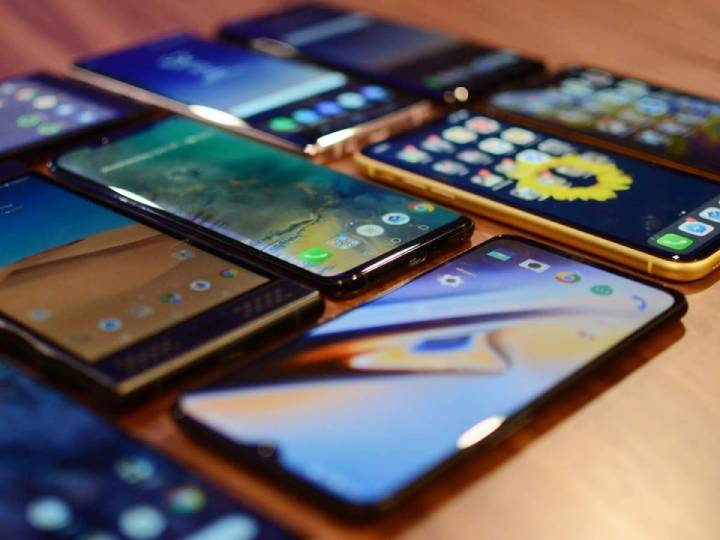
But the question that needs to be asked whether the wireless browser matters or, for that matter, is that necessary. The reason wireless browsers don’t matter is simple: apps – be it for iPhone, Android or Blackberry devices.

Rather than fire up a Web browser to use an online service, it’s much easier and usually faster to use an app, particularly for services that are frequently used. The use of apps rather than a browser means wireless users can personalize their devices to meet their needs rather than having to a use-size-fits-all browser.

The availability and user-friendliness of apps means that my iPhone features apps that run GMail, WordPress, DropBox, Facebook, Twitter, Skype, Yelp and Tungle. The only reason I would fire up Safari or Opera is to use something like Google Maps, searching for a telephone number or doing a Google search.

It means the wireless Web browser has become irrelevant. In fact, I could probably delete the browsers from my iPhone, and never really miss them.

Do you use a wireless Web browser? If so, why?

Finally, Google Chrome for Mac

When it comes to browsers, I’m always game to try something new. While Firefox is my default browser, I like Safari, Opera, Flock and IE7.

That said, I’ve been interested in trying Google Chrome but, unfortunately, an official version for the Mac wasn’t available until today. To check the beta, you can find it here.


Related Posts Plugin for WordPress, Blogger...