iPhone Mathematics: Consumers Will Pay and Pay and Pay

If you’re into economics, a classic is the razor/razor blade model in which you give away or sell a product, and then make lots of money over time by selling other products (hopefully, high-margin ones) so they can continue to use the original product.

With the introduction of the new 3G iPhone, Apple has enthusiastically embraced the razor/razor blade model – a move that will see them to sell a gazillion to consumers, while setting the stage for AT&T to make billions and billions and billions of dollars from customers happily willing to pay more and more for data service so they can continue to use their iPhone.

It’s brilliant – unless you’re a consumer.

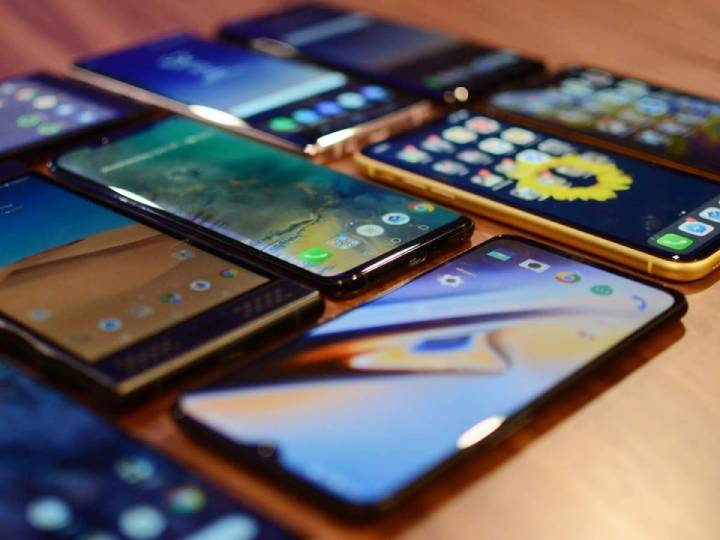
Think about it: there are millions of consumers who can’t wait to buy an iPhone and access all the wondering applications that will available on a pretty fast wireless network. It’s going to be a fantastic tool to surf the Web, watch video, make phone calls, play games, do some work.

You’re going to love it, you’re going to use it all the time, and you won’t be able to live without it.

Then, you’re going to learn the downside of the iPhone.

As the carriers looking to drive revenue growth and ARPU, iPhone users will be the proverbial cows led to slaughter. In the name of improving the wireless infrastructure to maintain a high-quality of service, wireless carriers will start to raise data prices – perhaps not dramatically but enough on a regular basis to make a difference.

Over time, your wireless bill will get bigger and bigger but you’ll be hooked on the iPhone so you’ll keep on paying much like you keep on paying for cable because you need 500+ channels. And don’t expect there to be wireless competition so you and your iPhone can move to another carrier. The iPhone is the golden goose, and no revenue and ARPU lovin’ carrier want to kill the golden goose.

My advice: love your iPhone but get ready to pay through the nose for it.

More: For a look at the new iPhone reality, check out AT&T press release that includes a 50% hike in monthly data fees to $30 from $20, signaling the death of low-price iPhone service. As well, Thought Gadgets offers some good insight into how the iPhone is all about boosting profit margins for Apple and AT&T.

Links: For people not focused on higher data prices, Mashable is all happy-happy-joy-joy about the fact the new iPhone comes with GPS. I’m sure the carriers will find a way for consumers to pay for that as well. The Financial Times has a good editorial on how the subsidies being provided d by AT&T to iPhone buyers are “an admission that the device has failed to change the [wireless] industry’s business model”. Oliver Thylmann has a post looking at location-based services.

Technorati Tags:

This entry was posted in Apple/iPod. Bookmark the permalink. Post a comment or leave a trackback: Trackback URL.

7 Comments

  1. Posted June 11, 2008 at 8:16 am | Permalink

    There are lots of blogs and posts about the price drop, few if any mention the ongoing commitment required for the subsidized version of the phone.

    And as you indicate, if you don’t like the price of the data plan, on an ordinary phone you can drop data and keep voice. It looks like with an iPhone, you can’t do that.

  2. Posted June 11, 2008 at 9:33 am | Permalink

    I knew it was too good to be true!

  3. n00b
    Posted June 11, 2008 at 11:17 am | Permalink

    And the price hikes don’t stop there!

    No more free SMS included with the AT&T data plan, so don’t forget to add that in as well. $5/month for 200 text messages, or $20/month for unlimited.

    So even if you skimp by on 200 like the original iPhone, that’s still another $120 you’ll be paying over the two years, in addition to the $240 extra from the data plan hike.

    When I’m paying $360 more than for the original iPhone, that $199 price tag on the phone doesn’t seem like such a bargain anymore. Apple can go screw themselves for the “…half the price” slogan.

  4. Scottgee
    Posted June 12, 2008 at 12:20 am | Permalink

    Recent stats show that two-thirds of Canadians have cell phones.

    To be a tad bit simplistic…

    If you could get ten million of the aforementioned cellular Canadians to commit to a truly unlimited data and voice plan at $40 per month, you would be bringing in $4.8 billion per year. That’s $40 x 12 months x 10 million subscribers = $4.8 billion in revenue. I’m certainly not versed in the economics of running a nationwide cellular network, but $4.8 billion is no small change!

    It would also be nice to see some regional/local carriers eat into this market… focusing on key urban centers and undercutting the three big boys significantly. Offer three hot phones (BBBold, iPhone, and Nokia NXX) to keep support simple and build a modern 3G network from the ground up.

    As far back as 2001, over 80% of Canadians lived in urban centers. Ontario alone has 10 million urban dwellers (StatsCan). Cover Quebec too and you’re up to 15 million.

    As a little side note… Rogers’ wireless division made $5.5 billion in revenue for 2007 with adjusted profits of $2.58 billion in profits! http://your.rogers.com/investorrelations/rogers_wireless.asp No wonder when you call one of the big 3 “providers” in Canada to complain about overcharging on long distance they are willing to drop the charges outright!

    Judging from the remaining list of bidders in the current round of spectrum auctions, Industry Canada has miserably failed to “Open up [Canada's] Wireless Industry to more Competition.” I bet you can name three of the top five bidders with your eyes closed! About the only chance left lies with Globalive (parent of Yak). Fingers crossed that they follow through and see the possibilities!

    Imagine if someone (somebody nudge Globalive) started a slick, modern network without all the baggage that comes with our beloved oligopolists. What a wonderful Canada we would live in!

    p.s. Ted, why don’t my monthly minutes roll over to the next month? I didn’t use them!

  5. Posted June 12, 2008 at 8:48 pm | Permalink

    Mark,

    Nice post on the Apple pricing. I agree, and perhaps your logic can be followed even further. The Apple iPhone is more than an entry for wireless providers to up their data fees in the future. It is also the first truly mobile operating system that can be updated via future functionality to boost other content sales from Apple.

    Really, Apple has created a tool that is in fact a mobile storefront, sitting in your pocket, waiting for an OS update to tempt you to buy future digitized content … music, videos, mapping services tied to GPS, who knows? If Apple devises a new 3-D entertainment system that people have to pay for, it will simply update the iPhone OS, make you an offer, and suddenly you’ll want to buy a 3-D library of content to go with your tunes and videos.

    Think of the beauty — Apple can rearrange its retail store, in your pocket, by sending out a signal!

    If you were to calculate the lifetime value of a typical Apple customer with an iPhone, and count up all the songs and movies and games that person might by over the 3-4 years before they need the next Apple toy, it’s surely more than $1,000.

    Personally, I think Apple deserves it, for changing the game and finally giving us the real mobile web. But make no mistake, Mr. Jobs is looking far beyond today’s phone sales into what else will fit on that screen.

  6. Posted June 12, 2008 at 9:13 pm | Permalink

    Ben:

    You make some excellent points, doing a better job than I did of drawing into the spotlight why Apple is so content to sell lower-price iPhones. If, as you suggest, the Apple retail store emerges, then it’s really a win-win for Apple and the carriers. Apple gets to a build a lucrative e-commerce platform while carriers get a strong revenue stream and a loyal customer base. iPhone users, meanwhile, will get a great device and an amazing array of services, although there will be a cost associated with it.

    Mark

  7. THAT Dave
    Posted June 30, 2008 at 10:52 am | Permalink

    I predict the Rogers pricing model, coupled with inevitable mid-contract increases, is going to kill the golden goose.

    The breadth of wi-fi coverage in Canada increases every year, and Skype is shaking the kinks out of its mobile product. A year ago I experimented with using a wi-fi enabled PDA rather than a cell phone and found, at least in urban areas, I could get by pretty well. I also saved $135 a month (my total monthly Treo bill from Rogers).

    Wi-fi PDAs spring to mind but surely there are other alternatives as well.

    Isn’t it possible, maybe even likely, that the mobile oligopoly will go the way of the music industry 8 years ago? It was usurious pricing that drove consumers to invent their own distribution network for music. Ironic that Apple would be the source of that kind of exodus in cell services, after stepping into the music breach with iTunes and prices consumers would pay.

4 Trackbacks

  1. [...] friend and fellow mesh 2008 organizer Mark Evans has a post about the iPhone and how it is just one part of a “razor and blades” market model — i.e., the carriers subsidize the phone as a [...]

  2. [...] same subject, broke it down like this, the iPhone is a razor, and the App store is selling blades, writes Mark Evans. He he went a bit further, too. He said: “love your iPhone but get ready to pay through the nose [...]

  3. By TM Forum Community - Blogs on June 18, 2008 at 7:32 am

    [...] operators as Apple has provided a rubber stamp to the subsidy-driven business model. They’ve also ceded pricing power back to the operator: that headline price drop for the device masks a hefty price rise for the [...]

  4. [...] same subject, broke it down like this, the iPhone is a razor, and the App store is selling blades, writes Mark Evans. He he went a bit further, too. He said: “love your iPhone but get ready to pay through the nose [...]

Post a Comment

Your email is never published nor shared. Required fields are marked *

*
*

You may use these HTML tags and attributes: <a href="" title=""> <abbr title=""> <acronym title=""> <b> <blockquote cite=""> <cite> <code> <del datetime=""> <em> <i> <q cite=""> <strike> <strong>

  • Subscribe RSSFollow me on TwitterSubscribe on FeedBurner
  • TwitterCounter for @markevans

  • How it works  |  Vision & Calls  |  Cost

    What's on

    Have you seen what you can get with BT's digital tv?

    © All Rights Reserved
    BT Vision and Calls

    Did you know that BT offers great deals in cheap mobile calls and cheap international phone calls? If you have a phone line with BT, come and see how we can reduce your bill of your home phone.


    Get one of our broadband telephone packages to get even more entertainment at a great value.

    How it works

    With BT Vision now you can enjoy Freeview digital tv channels, radio channels and a great range of on demand entertainment.

    Cost

    Get a deal at a great value with our digital tv packages. Visit our website to find out more.

    What you need

    BT Phone line

    BT Total Broadband

    A TV and aerial

    Freeview coverage

    Speed test  |  Availability  |  Support

    BT Total Broadband

    Want fast, broadband wireless internet? Get BT Total Broadband.

    Speed test

    If you are unsure of how fast your line is, have a broadband speed test. You just have to enter your telephone number or postcode below. You will need a minimum of 2MB speed to be able to get BT Vision.

    Enter phone number
    or postcode
    Availability

    Want to see check broadband availability in your local area? Enter your postcode in our broadband postcode checker below and find out what is available to you.

    Enter postcode
    Support

    BT offers great support with broadband services. Do you need broadband help? Contact us and we will be more than happy to help you.

  • Wikio - Top Blogs - Technology